Sound Systems company
A Sound Systems company designs, installs, and maintains audio systems for clear speech, music playback, paging, and background sound in commercial and residential spaces. A reliable sound systems provider combines speaker selection, amplifier sizing, system wiring, and acoustic planning to match the building layout and intended use.

What is a sound systems company?
A sound systems company is a contractor or engineering provider that plans and delivers integrated audio solutions. Typical projects include restaurants, offices, retail stores, meeting rooms, villas, and mixed-use buildings.
The main goal is to produce consistent sound coverage, speech intelligibility, and safe, code-aware installation. In practice, the company evaluates room size, ceiling height, zoning needs, ambient noise, and equipment compatibility before installation starts.
For a broader view of integrated building work, see Our Services and About Us.
How does a sound system work?
A building sound system converts an audio source into amplified sound through connected components:
- Source equipment sends the audio signal, such as microphones, media players, or conferencing devices.
- An amplifier increases the signal to a usable power level.
- Speakers distribute sound across one or more zones.
- Cabling and control points connect and manage the system safely.
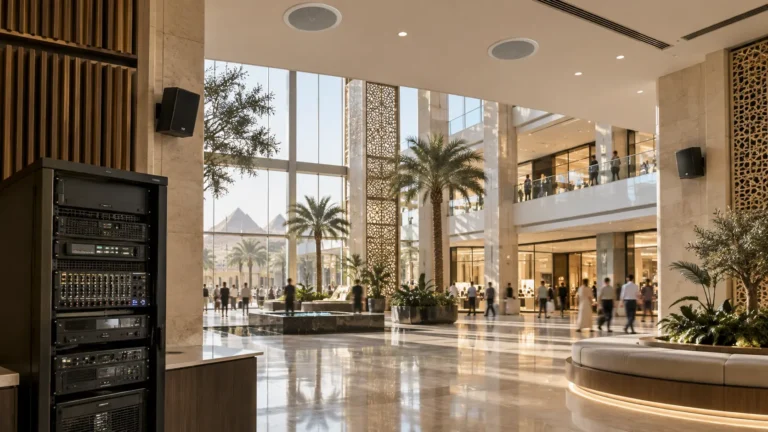
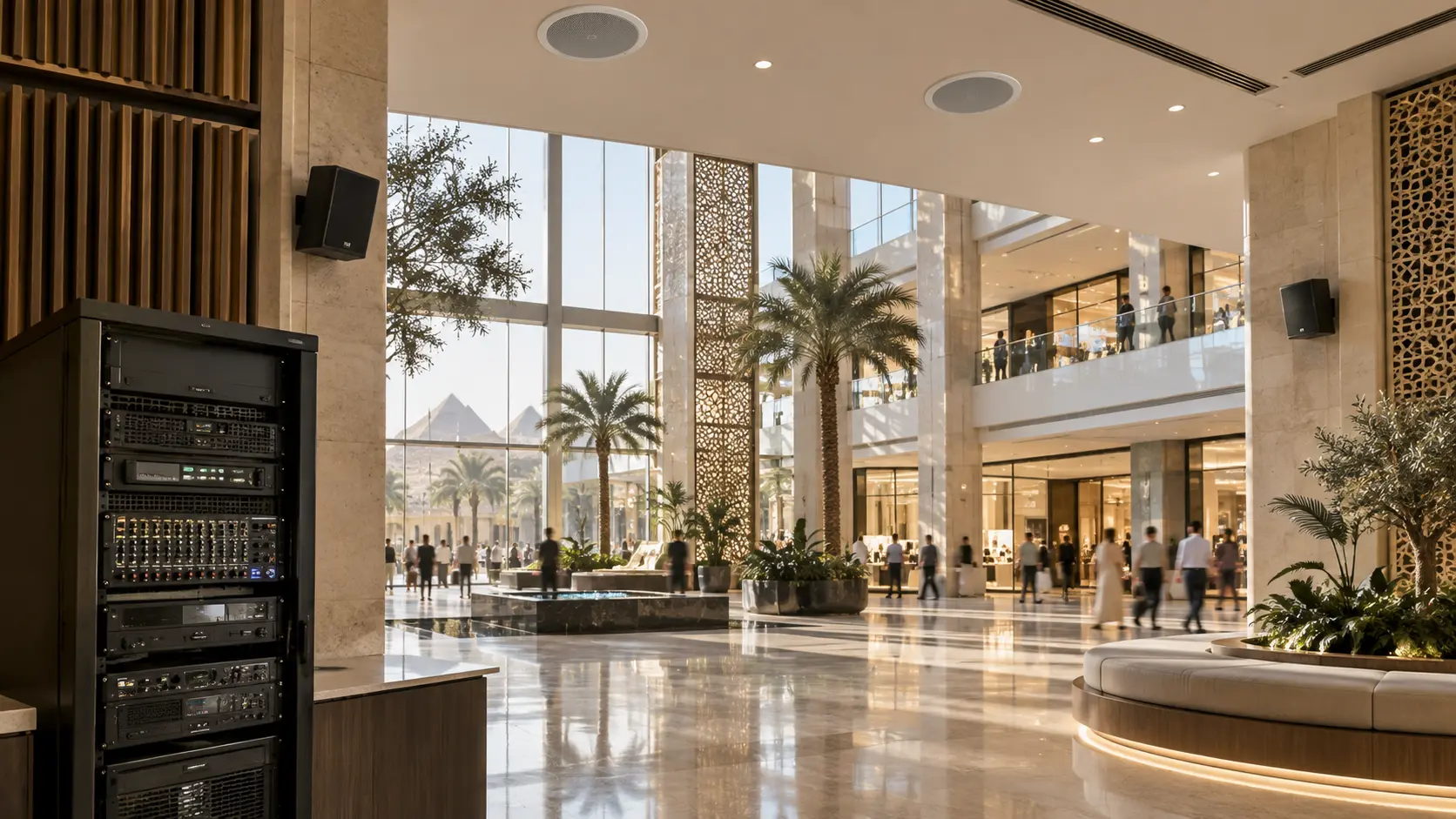
Loudspeakers convert electrical audio signals into audible sound. In distributed commercial systems, installers often use ceiling speakers for even coverage and wall-mounted speakers for directional output.
When should a business install a sound system?
A business should install a dedicated sound system when clear communication or controlled background audio affects customer experience, operations, or safety.
Common use cases include:
- Restaurants and cafes for background music and announcements
- Offices for paging, presentations, and meeting-room audio
- Retail spaces for promotions and ambient sound
- Reception areas for visitor communication
- Residential villas for multi-room audio distribution
Businesses planning fit-out or MEP coordination can also review Our Projects to compare typical installation environments.
What should you look for in a sound systems company?
Choose a provider that can assess both equipment and building conditions. A strong provider should offer:
- Site survey and room assessment
- System design matched to room function
- Speaker and amplifier sizing based on coverage needs
- Zoning for separate volume control by area
- Installation and testing with clear handover
- Maintenance support for ongoing reliability
A sound system should not be selected by product rating alone. Performance depends on placement, wiring quality, acoustic conditions, and correct power matching.
Sound system types compared
| System type | Best for | Main advantage | Main limitation |
|---|---|---|---|
| Ceiling speaker system | Offices, shops, restaurants | Even sound distribution | Less directional output |
| Wall-mounted speaker system | Open areas, cafes, halls | Stronger targeted coverage | More visible hardware |
| Multi-zone audio system | Large commercial spaces | Separate control for each area | More planning required |
| Meeting room audio system | Offices, boardrooms | Better speech clarity | Usually room-specific |
How is a professional sound system installed?
A typical installation process follows these steps:
- Survey the space and define audio goals.
- Select components based on size, usage, and zoning.
- Prepare wiring paths with coordination for electrical and ceiling works.
- Install speakers, amplifiers, and controls.
- Test volume balance, clarity, and coverage.
- Deliver documentation and user guidance.
Why does integrated installation matter?
Integrated installation reduces rework and improves system reliability. When sound systems are coordinated with electrical, networking, and interior fit-out work, the result is cleaner routing, better equipment placement, and easier maintenance access.
This matters for MEP-led projects where multiple services share ceilings, walls, and equipment zones.
FAQ
What is the difference between a home audio setup and a commercial sound system?
A commercial sound system is designed for wider coverage, zoning, longer operating hours, and more predictable speech clarity. A home setup usually prioritizes personal listening rather than continuous public-area performance.
How long does sound system installation take?
Installation time depends on project size, wiring readiness, and ceiling completion. Small spaces may take one to three days, while larger multi-zone projects usually require longer planning and testing.
Why is speaker placement important?
Speaker placement affects clarity, volume balance, and dead spots. Even high-quality equipment performs poorly if speakers are installed at the wrong height, spacing, or direction.
When should a business use ceiling speakers?
Ceiling speakers are useful when a business needs even background coverage with minimal visual impact. They are common in offices, clinics, shops, and dining areas.
Where are wall-mounted speakers a better choice?
Wall-mounted speakers are often better in open spaces, semi-outdoor areas, or rooms that need more directional sound. They also work well where ceiling design limits speaker placement.
How often should a sound system be maintained?
Most commercial systems should be checked periodically for wiring integrity, amplifier performance, and speaker output consistency. Preventive review is especially important in high-use venues.
Can a sound system be combined with paging or announcement functions?
Yes. Many systems support paging, background music, and area-based announcements in the same installation. The design must account for zoning, microphone points, and control access.
Sources: General technical definitions adapted from the publicly available overview of loudspeaker function on Wikipedia and product-category conventions commonly used in commercial audio markets as of 2026.